
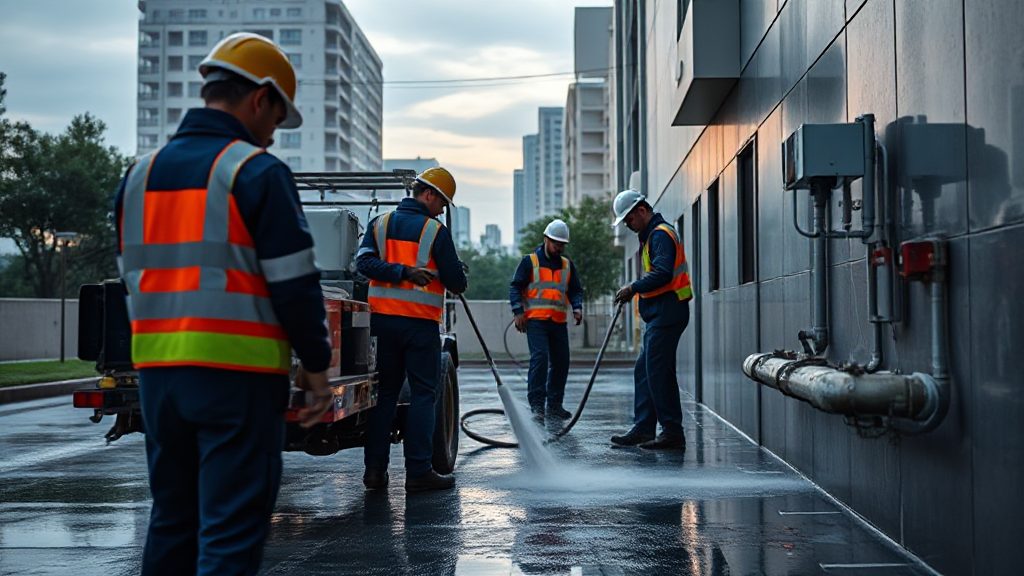
Desentupidora Bertioga: What to Prepare Before the Team Arrives
Desentupidora Bertioga: What to Prepare Before the Team Arrives
Most guides about emergency drain services start with the phone call. That is the easy part. The step nearly every homeowner skips is the two minutes before the call, when you should write down where the water is backing up, what you have already poured down the drain, and whether the problem is one fixture or the whole property. Those three details decide whether a desentupidora Bertioga crew arrives with a hand auger or a hydrojetting truck.
I tested this process the way a reviewer should: by treating the service as a procedure with requirements, steps and verification points, not as a magic number you dial. What follows is the order that actually produces a working drain, plus the checks that tell you the job was done properly rather than just temporarily unclogged.
Requirements to confirm before you book the service
Bertioga sits between the Serra do Mar and the Atlantic, and that geography matters for plumbing. Many properties are seasonal, many are on streets where access for a large vacuum or jetting truck is tight, and many have older septic or grease systems rather than a simple municipal connection. A crew that knows the municipality will ask about these things on the phone. If they do not, you should raise them yourself.
Know which system you are on
Before anything else, establish whether the property drains into the public sewage network, a septic tank, or a sump. The behavior of a clog is different in each case. A blocked septic tank can back up into every low fixture at once, while a single slow shower usually points to a local obstruction in that branch line. Getting this wrong leads to the wrong equipment and a second visit.
If you rent, confirm that the owner authorizes the service and who pays. Emergency work on a rented property is a common source of dispute, and a written message approving the call protects both sides.
Check access and clearance
Measure the gate, the driveway and the distance from the street to the inspection box. Hydrojetting and vacuum equipment needs room to park and hose reach. In dense Bertioga neighborhoods, a truck may have to stop a block away, which changes the time estimate. Tell the dispatcher about stairs, steep ramps, locked garages or a car parked over the cleanout.
Also confirm whether the technician will need to enter the property while you are away. Most reputable companies prefer someone present, and you should insist on being told the price range before work begins.
List what you have already tried
This is the detail that saves money. Chemical drain cleaners, plungers, homemade wire hooks and boiling water all change the picture. Caustic products can sit in the pipe and injure a technician who opens a fitting, and they can damage older PVC joints. Say exactly what you used, how much, and when.
Never pour a second chemical product on top of a first one that failed. The mixture can generate heat or fumes, and it makes the blockage harder to clear safely.
Gather the property details
- Address with any access notes, plus a phone number that will be answered on site.
- Type of system: public network, septic tank or sump.
- Location of cleanouts, inspection boxes and the tank lid if you know it.
- Which fixtures are affected and whether the backup is constant or only after use.
- Any history of repeated clogs in the same spot.
The procedure from first call to flowing drain
Once the requirements are clear, the job follows a predictable sequence. A competent desentupidora Bertioga SP operation will explain each stage as it happens, and you should feel free to ask why a particular tool is being used.
Step 1: Describe the symptom precisely
On the call, say what backs up and when. “The kitchen sink drains slowly for a minute and then gurgles” is far more useful than “the sink is clogged.” Gurgling often means air is being pulled through a partially blocked vent or branch line, which points the technician toward the right section of pipe before anyone opens a fitting.
Mention any smell. A sewage odor indoors without visible water can indicate a dry trap or a vent problem rather than a blockage, and that changes the diagnosis.
Step 2: Get the quote structure in writing
Ask how the price is built: a call-out fee, a per-meter charge for cable or jetting, and a separate rate for vacuum removal. Confirm whether the quoted figure covers the likely cause or only the inspection. A clear quote before arrival is the strongest protection against a surprise bill.
Step 3: Protect the area before the crew arrives
Move rugs, boxes and furniture away from the affected drain and the nearest cleanout. Put down old towels. If water is rising, stop using every fixture on that system, including the washing machine and dishwasher, and turn off the water supply to appliances if they are backing up. This prevents a small overflow from becoming a floor replacement.
Step 4: Inspection and tool selection
The technician should locate the blockage before clearing it. That may mean opening a cleanout, using a camera on a reel, or simply testing flow from different fixtures. The tool follows the finding:
- Hand auger or drain snake for a local clog close to the fixture, common in sinks and showers.
- Mechanical cable machine for longer branch lines and older cast-iron or clay pipe.
- Hydrojetting for grease, scale and roots, using high-pressure water to scour the full pipe wall.
- Vacuum truck for septic tanks, grease traps and heavy solids that cannot be flushed away.
If someone proposes hydrojetting as a first move on a fragile old line without inspecting it, ask why. Pressure that is too high on a deteriorated pipe causes damage that costs far more than the original clog.
Step 5: Clear, then verify
Clearing is not the same as fixing. Once the blockage is removed, the technician should run water through every affected fixture at once and watch the cleanout. A drain that flows under single use but backs up when the shower and washing machine run together is still partly blocked.
Ask for the camera to be run again after jetting if roots or heavy grease were found. Seeing the pipe wall clean is the only real proof the job is finished.
Step 6: Clean up and document
Confirm that solids and wastewater removed from the system are taken away, not left on the ground or in a garden bed. Ask for a simple written record of what was found, what was done, and any section of pipe flagged as a future risk. That document is what a plumber will ask for if the same spot clogs again.
What to check after the team leaves
The final stage is the one homeowners rush. Give it ten minutes and you will catch most incomplete jobs before they become repeat emergencies.
Run a full-load test
Fill the sink and let it drain in one go. Run the shower for several minutes. Start the washing machine. Flush every toilet on the system. Watch the lowest drain in the property while you do it. Any gurgle, rise or slow return means the line is not fully open.
Check for leaks at the access points
Look at every cleanout cap and inspection box the technician opened. A cap that was not tightened properly will seep quietly and damage the surrounding wall or floor over weeks. Wipe the joint, run water, and look again.
Confirm the cause was addressed, not just the symptom
If grease caused the clog, the fix is a change in how fat and food waste are handled. If roots were found, the pipe may need repair, not just another clearing. If the septic tank was full, ask when it should be pumped again and keep that date. A desentupidora em Bertioga SP team that explains the underlying cause is giving you the maintenance plan, not just an invoice.
Keep a simple record
Note the date, the fixtures affected, the tool used and the price. Repeat clogs in the same location are a pattern, and a pattern is the signal that a section of pipe needs replacement or a tank needs more frequent service. That record turns a series of emergencies into a predictable maintenance schedule, which is the outcome that actually protects the property.
The job is done when the drain flows under full load, the access points are sealed, and you can explain what caused the blockage. Anything short of that is a temporary fix, and in Bertioga’s mix of seasonal homes and older systems, temporary fixes tend to return at the worst possible moment.