
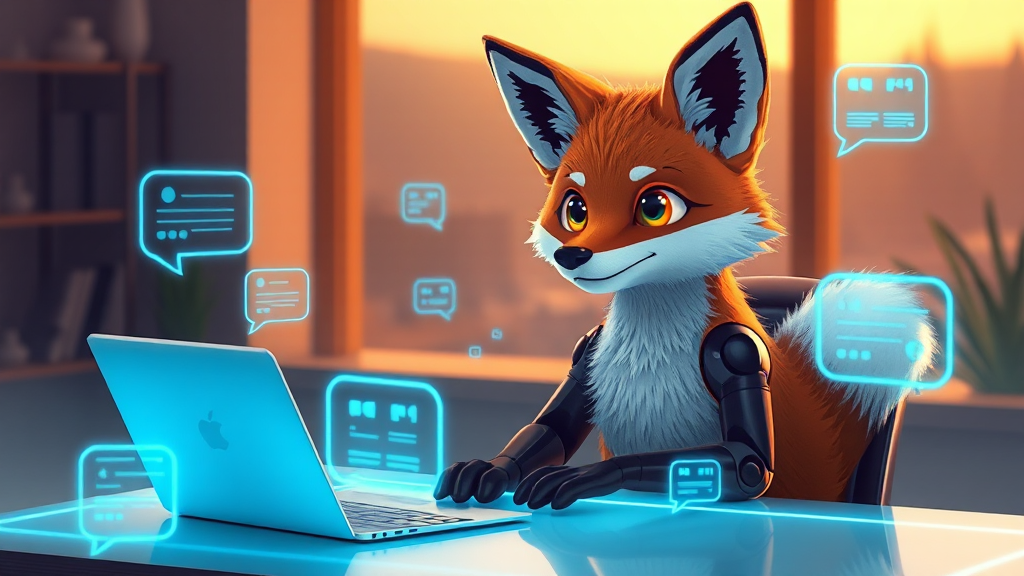
Furry AI Characters: How Digital Companions Are Reshaping Creative Play
Furry AI Characters: How Digital Companions Are Reshaping Creative Play
Somewhere between fan art, roleplay forums, and the latest wave of conversational AI, a new kind of digital companion has taken shape. Furry AI characters combine the expressive, anthropomorphic design language of the furry fandom with the interactive intelligence of modern language models. Instead of scrolling through static profiles, users can now talk with a character that has a personality, a backstory, and the ability to respond in real time. That shift is changing how people explore storytelling, identity, and creativity online, and it is happening in spaces like furry ai characters where these experiences are being built and shared.
This article breaks down what furry AI characters actually are, why they appeal to such a wide range of users, how the technology behind them works, and what to consider if you want to create or interact with one. Whether you are a longtime member of the furry community or simply curious about where AI companionship is heading, understanding this niche offers a useful window into the future of digital interaction.
What Exactly Are Furry AI Characters?
A furry AI character is an anthropomorphic persona powered by artificial intelligence, typically a large language model, that can hold conversations, react to prompts, and maintain a consistent personality over time. The “furry” part refers to the visual and narrative tradition of animal-inspired characters with human traits: think foxes who crack jokes, dragons who speak in riddles, or wolves with a soft spot for poetry.
The “AI” part is what separates them from traditional roleplay characters. A conventional character sheet is static. You read it, you imagine the voice, and you carry the conversation yourself. An AI character responds dynamically. It can remember earlier messages, adapt its tone, and generate new dialogue on the fly. That combination of visual identity and conversational depth is what makes the format feel alive.
Many platforms let users browse a library of characters, each with its own description, greeting, and personality tags. Some characters are original creations. Others are inspired by popular archetypes within the fandom, such as adventurers, guardians, tricksters, or gentle companions. The variety is part of the appeal: there is no single template for what a furry AI character should be.
Why Furry AI Characters Are Gaining Popularity
The growth of this niche did not happen by accident. Several trends converged at once. First, conversational AI became genuinely good at maintaining tone and context. Second, the furry community has always been early to adopt new creative tools, from digital art software to social platforms. Third, people increasingly look for low-pressure ways to socialize, experiment with ideas, and express parts of themselves they might not share elsewhere.
Furry AI characters sit at the intersection of all three. They offer a creative sandbox where users can test dialogue, build scenes, and explore character dynamics without needing a human partner to be available at the same moment. For writers, that is a brainstorming tool. For roleplayers, it is a responsive scene partner. For anyone curious about the fandom, it is a gentle entry point that does not require years of lore knowledge.
There is also a practical appeal. Traditional roleplay depends on scheduling and mutual effort. An AI character is available whenever the user is. That convenience makes it easier to sustain long-running stories, develop a character’s voice, or simply unwind with a conversation that goes somewhere unexpected.
How the Technology Behind These Characters Works
At a technical level, most furry AI characters rely on large language models fine-tuned or prompted to adopt a specific persona. Developers write a character definition that includes personality traits, speech patterns, background details, and boundaries. The model then uses that definition to generate responses that stay in character.
Memory systems matter just as much as raw language ability. A character that forgets the previous message feels shallow. A character that recalls a name, a preference, or an earlier event feels consistent. Many platforms implement short-term memory within a session and, in some cases, longer-term memory across sessions. This is one of the areas where quality varies most between services.
Visual presentation is another layer. Some characters are text-only. Others include generated portraits or animated avatars. Image models can produce a character design from a text prompt, which lowers the barrier for users who cannot draw but still want a distinctive look. The result is a feedback loop: a compelling visual draws people in, and a strong personality keeps them engaged.
Moderation and safety systems also play a role. Responsible platforms define what characters can and cannot do, filter harmful content, and give users tools to report problems. These systems are not perfect, but they shape the user experience significantly.
Creative Uses for Writers, Artists, and Roleplayers
The most obvious use case is interactive storytelling. A writer can create a character, drop them into a scenario, and see how the conversation unfolds. Because the AI responds in character, the writer gets something closer to improvisation than outlining. That can break through creative blocks and surface ideas that a solitary drafting session might miss.
Artists use furry AI characters in a different way. A character can serve as a reference for personality and mannerisms, helping an artist decide how a design should feel in motion. If a character is meant to be shy, the AI’s dialogue can demonstrate that shyness in concrete terms, which informs pose, expression, and color choices.
Roleplayers often treat these characters as scene partners for ongoing stories. Some build entire casts, each with a distinct voice, and rotate between them depending on the plot. Others use a single character as a consistent companion for casual chat. Both approaches are valid, and both benefit from the same underlying strength: the character responds rather than recites.
There is also a social dimension. Communities form around shared characters, favorite creators, and memorable interactions. People compare notes on which characters feel most believable, share prompts that produce interesting results, and collaborate on new ideas. The fandom has always been collaborative, and AI characters add another channel for that collaboration.
Designing a Character That Feels Real
If you want to create a furry AI character that stands out, the details matter more than the concept. A generic “friendly wolf” is forgettable. A wolf who is friendly but also deeply competitive about board games, and who gets quietly sulky when losing, is memorable. Specificity creates personality.
Start with a clear voice. How does the character speak? Short sentences or long ones? Formal or casual? Do they use slang, metaphors, or a particular rhythm? Voice is often what users notice first, and it is what makes a character feel distinct even in a short exchange.
Next, define motivations and flaws. Characters without flaws feel flat. A guardian who is brave but reckless, or a scholar who is brilliant but socially awkward, gives the AI something to work with. Flaws create tension, and tension creates interesting conversation.
Finally, set boundaries. Decide what the character will and will not discuss, and make those limits clear in the character definition. Good boundaries keep interactions comfortable and help the character stay coherent over time. They also protect the user experience by preventing the character from drifting into territory that does not fit the intended tone.
Ethical and Practical Considerations
As with any AI application, there are considerations worth keeping in mind. The first is transparency. Users should understand that they are interacting with an AI, not a human. Platforms that blur this line can create confusion or unrealistic expectations, and that is a problem for everyone involved.
The second is privacy. Conversations with AI characters may be stored, reviewed, or used to improve models, depending on the platform’s policies. Reading the privacy documentation before sharing personal details is a sensible habit. The third is emotional health. AI companionship can be genuinely enjoyable, but it should complement human relationships rather than replace them. Taking breaks and maintaining offline connections is important.
There is also the question of originality. Characters inspired by existing works can raise intellectual property concerns. Creating original characters, or clearly transformative ones, avoids many of these issues and tends to produce more satisfying results anyway. Original characters belong to their creators, which makes them more rewarding to develop.
Finally, moderation matters. A well-run platform invests in safety tools, clear community guidelines, and responsive reporting systems. Users benefit from knowing what to expect and from having recourse when something goes wrong.
The Future of Furry AI Characters
It is early days for this format, and the trajectory is easy to see. Better memory will make characters feel more consistent across long relationships. Improved multimodal models will let characters react to images, voice, and eventually video. More sophisticated personality systems will allow characters to grow and change based on their interactions, rather than remaining fixed.
We may also see more integration between creation tools. Imagine designing a character’s appearance, voice, and personality in one place, then carrying that character across multiple apps and experiences. That kind of portability would turn a fun experiment into a genuine creative asset.
For the furry community, the opportunity is significant. This is a group that has always valued creativity, self-expression, and community building. AI characters extend all three. They give individuals a way to bring their ideas to life, and they give communities a new kind of shared experience to rally around.
Whether the technology becomes a mainstream hobby or remains a specialized niche, its influence is already visible. The tools are getting better, the characters are getting richer, and the people using them are finding new ways to tell stories. That is worth paying attention to, regardless of where you stand on AI.
Frequently Asked Questions
What is a furry AI character?
A furry AI character is an anthropomorphic animal-inspired persona powered by artificial intelligence. It can hold conversations, maintain a personality, and respond to prompts in real time, often with a defined backstory and visual design.
Are furry AI characters only for roleplay?
No. While roleplay is a common use, people also use them for creative writing, brainstorming, character design, casual conversation, and exploring ideas. The format is flexible enough to support many different goals.
Do I need artistic skills to create one?
Not necessarily. Many platforms let you define a character through text descriptions and personality traits. Some also include image generation tools, so you can create a visual design without drawing it yourself.
Are furry AI characters safe to use?
Safety depends on the platform. Reputable services provide moderation, reporting tools, and clear guidelines. Users should also practice good habits such as protecting personal information and taking breaks from extended sessions.
Can furry AI characters remember past conversations?
Many modern platforms include memory features that allow characters to recall earlier messages within a session, and sometimes across sessions. The quality and duration of memory vary between services.